Hey there! I’m an AC motor supplier, and I get this question a lot: “What is the efficiency of an AC motor?” Well, let’s dive right in and break it down in a way that’s easy to understand. AC Motor
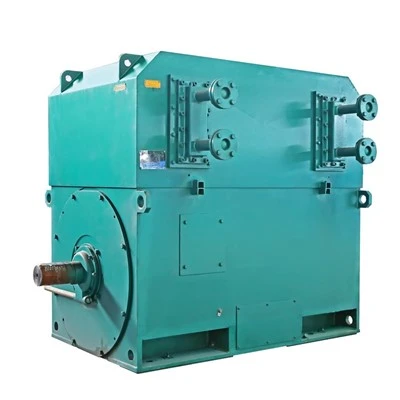
First off, motor efficiency is basically a measure of how well an AC motor can convert electrical energy into mechanical energy. You see, when you supply electricity to an AC motor, not all of that energy gets transformed into useful work. Some of it is lost in different forms, like heat, noise, and vibration. And the efficiency of the motor is calculated as the ratio of the mechanical power output to the electrical power input.
Let’s say you have an AC motor, and you’re putting in 1000 watts of electrical power. But when you measure the mechanical power coming out of the motor, it’s only 900 watts. The efficiency of that motor, in this case, would be 90% (since 900 divided by 1000 is 0.9, or 90%). So, that’s the basic concept of efficiency in an AC motor, but there’s a whole lot more to it.
Now, a bunch of factors can affect the efficiency of an AC motor. One of the biggies is the design of the motor itself. Motors with high – quality materials and well – engineered designs usually have better efficiency. For example, motors made with low – loss electrical steel in the stator and rotor cores can reduce the energy losses due to eddy currents and hysteresis. Eddy currents are those circulating currents that get induced in the metal parts of the motor, and they cause energy to be dissipated as heat. And hysteresis is the energy loss that occurs as the magnetic field in the iron core changes direction.
The size of the motor also plays a role. In general, larger motors tend to be more efficient than smaller ones. That’s because the fixed losses, like friction and windage losses, are relatively smaller compared to the power output in larger motors. Friction losses happen at the bearings and other moving parts of the motor, and windage losses are due to the resistance of the motor’s rotating parts as they move through the air.
Load is another crucial factor. AC motors are most efficient when they’re operating at or near their rated load. If you run a motor at a very light load, say less than 25% of its rated load, its efficiency drops significantly. This is because the fixed losses remain relatively constant, but the useful power output is very low. On the other hand, if you overload the motor, it has to work harder, and this can also lead to increased losses and reduced efficiency. And overloading can even damage the motor over time.
The operating environment of the motor is also important. High temperatures can cause the resistance of the motor’s windings to increase, which in turn leads to more heat generation and energy losses. Humidity can also have a negative impact on the motor’s insulation, which can affect its performance and efficiency. And if there’s a lot of dust or dirt in the environment, it can clog the motor’s vents and cooling channels, making it harder for the motor to dissipate heat and reducing its efficiency.
Now, why does motor efficiency matter? Well, for one thing, it has a big impact on energy costs. In industrial settings, where motors are used to power all sorts of equipment, even a small increase in efficiency can result in significant cost savings over time. For example, if you have a factory with a bunch of motors running 24/7, upgrading to more efficient motors can cut down on your electricity bills substantially.
It’s also good for the environment. When motors are more efficient, they use less electricity, which means less demand on power plants. And since many power plants rely on fossil fuels, using more efficient motors can help reduce greenhouse gas emissions. So, it’s a win – win situation for both your pocket and the planet.
As an AC motor supplier, I get to work with all kinds of motors, from small fractional – horsepower ones used in household appliances to large industrial motors that can take on heavy – duty tasks. And I’ve seen firsthand how the right motor can make a huge difference in terms of efficiency and performance.
For instance, we’ve got a line of energy – efficient AC motors that are designed with the latest technology to minimize losses. These motors use advanced materials in the stator and rotor, and they’ve been engineered to operate at high efficiency across a wide range of loads. We’ve also focused on improving the cooling systems to make sure the motors can stay cool even under heavy use, which helps maintain their efficiency.
I remember one customer who had an old, inefficient motor in their manufacturing process. It was consuming a ton of electricity, and they were constantly having problems with overheating. We recommended one of our energy – efficient motors, and after they installed it, they were amazed at the results. Not only did their energy costs go down, but the motor also ran more smoothly and required less maintenance.
When you’re looking to buy an AC motor, it’s really important to pay attention to the efficiency ratings. Look for motors that are labeled with high – efficiency ratings, and don’t be afraid to ask questions. As a supplier, I’m always happy to help customers understand the technical details and choose the right motor for their needs.
And if you’re in the market for an AC motor, whether it’s for a small household project or a large industrial application, I’d love to talk to you. We can have a chat about your specific requirements, and I can show you how our motors can provide you with better efficiency, lower energy costs, and reliable performance. So, don’t hesitate to reach out and start a conversation about your AC motor needs.
In summary, the efficiency of an AC motor is all about how well it can turn electrical energy into useful mechanical work. It’s influenced by many factors like design, size, load, and the operating environment. And choosing an efficient motor can lead to significant cost savings and environmental benefits. As an AC motor supplier, I’m here to help you make the best choice for your project.
Reach out if you’re interested in discussing your AC motor requirements. I’m looking forward to chatting with you and finding the perfect motor solution for you.
DC Motor References
- Electric Motors and Drives: Fundamentals, Types and Applications by Austin Hughes and Bill Drury
- Handbook of Electric Motors by Irving L. Kosow
Xian Putai Electric Motor Equipment Co., Ltd.
Xian Putai Electric Motor Equipment Co., Ltd. is one of the most professional ac motor manufacturers and suppliers in China, also supports customized service with low price. Welcome to buy advanced ac motor in stock here from our factory. If you have any enquiry about quotation, please feel free to email us.
Address: Haibo Guangchang Fengcheng Nine Road Economical & Technological Development District Xi’an City Shaanxi Province – China
E-mail: sales@putaimotor.com
WebSite: https://www.putaimotor.com/
