Hey there! Let’s cut to the chase—if you’re in the market for wooden door lock display stands (which, guess what, I sell), you’ve probably asked yourself at some point: do these things actually come in different shapes? Spoiler alert: yeah, they do, and it’s not just random shapes either. I’ve been supplying these stands for, like, 8 years now, and I’ve seen every shape you can imagine—some for big box hardware stores, some for tiny boutique lock shops, even some for pop-up brand events. Let me break this down like I would to a regular client who’s not here to overcomplicate it. Wooden Door Lock Display Stand
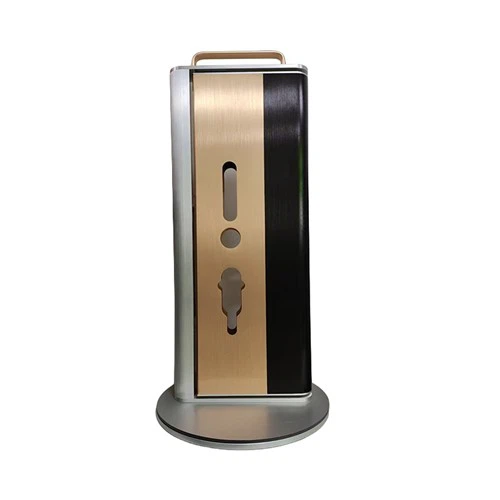
First off, why does shape even matter? Let’s be real—wooden door lock display stands aren’t just pretty shelf space. They’re meant to do a job: hold different lock types, draw customers’ eyes, fit your store’s layout. If a stand’s the wrong shape, it’s basically useless. I’ve had clients come to me 6 months after buying a random generic stand going, “This won’t fit my deadbolt displays—can you hook me up with something else?” So shape isn’t just a cosmetic choice; it’s a functional one.
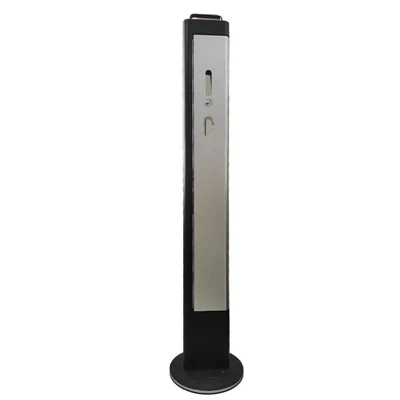
Let’s start with the most common shape: vertical floor stands. These are the ones you see leaning against a wall in most hardware stores. They’re tall, narrow, and usually have tiers—like, 3 to 5 shelves stacked on top of each other. Wait, but they’re not all the same vertical, right? Some are slimline (only 12 inches wide) for tight hallway spaces, others are wider (24 inches) if you’ve got more floor room. What’s the point of these? They’re made for people who walk by your store. When someone’s just browsing, they don’t want to stop in a big open area—they can glance at a vertical stand while walking past. I recently sold a batch of slim vertical stands to a small hardware shop in Portland that had a tiny entryway; before that, they had a bulky horizontal stand that blocked the door. The sales rep there hit me up last month saying lock sales jumped 15% because people could actually see the displays now.
Then there are countertop stands. These are smaller, obviously—for the checkout counter or a middle table in a boutique. But even countertop stands have different shapes. Some are rectangular, some are square, some are even L-shaped. Wait, L-shaped? Yeah, I did a custom order for a boutique lock brand in Brooklyn that wanted their countertop stand to fit into a corner of their display table so it didn’t take up space where they laid out lock brochures. That made total sense—their table was 48×24 inches, so an L-shape let them tuck the lock displays into the corner without crowding the brochures. Countertop stands are great for showcasing high-end locks, right? They’re at eye level, so when a customer is waiting to pay, they’ll pick up a sample lock and check it out. I’ve found that square countertop stands are the most popular for small shops because they fit standard counter spaces, but L-shaped is blowing up for brands that do pop-up events—easy to move, easy to tuck into any corner.
Wait, what about freestanding multi-tier stands that are more like a pyramid? Yeah, those exist too. I call them “pyramid stands” but they’re actually a stepped triangle, wider at the base and narrowing as it goes up. Why would someone use that? Let’s say you have a trade show booth—you don’t want a tall vertical stand that blocks your other booth displays. A pyramid stand is shorter, but still has enough space for 5-6 lock samples. I supplied a bunch of these to a lock brand that went to the National Hardware Show last year; they said the pyramid shape made their booth look less cluttered because the base was wide but it tapered up, so people could walk around it easily. Also, the slanted tiers mean customers can see every lock—no one’s hidden on a top shelf, which is a problem with some flat vertical stands.
Don’t forget wall-mounted stands too. Those are rectangular, but wait—no, some are curved! Wait, hold on, I’m not talking about the flimsy metal wall stands you see at dollar stores. These are wooden, so they can be custom-shaped. A lot of boutique home improvement stores have curved wall sections to look more modern, so their wall-mounted lock stands are curved too. They follow the wall’s contour, so it doesn’t look like a random flat piece of wood glued to a curved wall. I did a custom wall stand for a store in Seattle that had curved display walls; before that, they had straight stands that left empty gaps where the wall curved, so they wasted space. The curved stands fit perfectly, and they can fit 8-10 lock samples on each one. That’s the thing about wooden stands—they’re way easier to shape than metal ones, right? You can bend the wood (with steam, don’t worry, it’s not some magic trick) into curves or even organic shapes, whereas metal would be super expensive to customize.
Wait, have you seen the round display stands? Yeah, those are big for modern showrooms. A lot of luxury lock brands have showrooms where they want customers to walk around a stand, not just look at it from the front. Round stands are usually tall, with rotating tiers—so when a customer walks up, they can spin it and see every lock without reaching. I sold a set of rotating round stands to a high-end door company in Miami; their showroom has open floor space, so the round stands are the centerpiece. They told me that before, their old square stands only let people see one side, so customers would miss their fingerprint locks that were on the back. Now, every customer spins it, and they’re selling more of the fingerprint and smart locks, which are the higher-ticket items.
Oh, and let’s not forget the niche shapes—like the “shelf-with-a-hook” stands. Wait, no, those are for door locks that you can hang on a sample door, right? Some clients want stands that let them hang locks on a wooden sample door (the kind they keep by the door displays) instead of just setting them on a shelf. So those stands have a base, and a little wooden door frame attached, shaped like a mini door, with hooks for each lock. I did a batch of those for a lock manufacturer in Germany that does a lot of wholesale; their retailers love being able to hang locks on a sample door because it’s way easier to show how the lock fits on a real door, not just sitting on a shelf. That’s a shape I don’t hear about as much, but it’s super functional for B2B clients or retail spaces that want to let customers test the lock’s fit.
Now, let’s talk about why I make all these different shapes. It’s not just to have variety—every client has a different space. A big box store has 10 feet of floor space, so they can go with a wide vertical stand or a pyramid. A tiny boutique has a 2-foot counter, so they need a slim L-shaped countertop stand. A trade show booth needs something that’s easy to transport, so a round rotating stand that comes apart is way better than a fixed big stand. Also, wooden stands are customizable, so I can make almost any shape—from a hexagon (I did one for a brand that wanted a modern, geometric look) to a small square that fits in a toolbox for mobile sales reps. Wait, mobile sales reps! That’s another group. They need a stand that’s easy to carry, so I make small, compact stands—like a 12×12 inch square that fits in a duffel bag, with 4 shelves for lock samples. I sold a set of those to a rep who sells locks to contractors; he said he can bring 5 different lock styles to a job site in one stand, instead of carrying a bunch of boxes.
Wait, let’s address a common question: do all shapes work for every lock type? Short answer: no. For example, a big deadbolt lock is too heavy for a small countertop pyramid stand—so I’ll adjust the shape of the tiers to be wider, with a thicker base, to support it. Smart locks, which are bulkier, need stands with deeper shelves, so I’ll make the countertop stands rectangular instead of square, with 6-inch deep shelves instead of 4. That’s the science part, right? It’s not just shaping wood for looks; it’s engineering the shape to fit the product. I’ve messed up a couple times early on—like, a client wanted a round stand for heavy deadbolts, and the first one I made wobbled because the base was too small. Now, I always ask clients what lock types they’re displaying, so I can tweak the shape accordingly. That’s why I’m not just a supplier—I’m someone who actually understands the product end, too.
Another thing: durability. When you shape a wooden stand, you have to make sure it’s still sturdy. A curved stand might look cool, but if the cuts are too thin, it’ll break. I use solid pine or oak (depending on the client’s budget) for all my stands, so even the custom shapes are strong. The pyramid stands I make have a wider base than the top, so they don’t tip over, even if someone knocks into them. The wall-mounted curved stands have extra supports on the back, so they don’t pull away from the wall. I don’t sell flimsy stuff—all my stands are made to last, no matter the shape.
Wait, let’s get real here. A lot of suppliers will tell you “all stands are the same” but that’s not true. I’ve had clients come to me from other suppliers where the stand was the wrong shape, and they couldn’t return it because it was custom. No, I don’t do that. I ask questions first: How much space do you have? What locks are you displaying? Do you need it for a store, trade show, or mobile sales? Then I suggest the right shape. For example, a client in Austin wanted a stand for their farmers market pop-up—they needed something lightweight, easy to set up, and visible from far away. I suggested a tall vertical stand with a curved top (to catch people’s eyes) and a handle on the back so they could carry it. That worked way better than a generic square stand they were looking at from another supplier.
So to circle back: yes, wooden door lock display stands totally come in different shapes, and the shape isn’t just a design choice—it’s a functional one that affects your sales, your space, and how easy it is to move the stand. I’ve seen every shape under the sun, and I can tell you that the right shape for your specific needs will make a way bigger difference than you think.
If you’re tired of generic stands that don’t fit your space or your locks, hit me up. I don’t do a one-size-fits-all—let’s talk about what you need, and I can build or supply the perfect shape for your wooden door lock displays. Whether you need a slim countertop stand for a boutique, a vertical floor stand for a hardware store, a curved wall stand for a modern showroom, or even a custom niche shape for a pop-up, I’ve got you covered. No stiff proposals, no confusing jargon—just straight talk and stands that work.
Wooden Door Lock Display Stand Reference: Interior Design for Retail Spaces: Functional Display Solutions, 2022; Woodworking for Custom Retail Fixtures, 2021; Lock Retailer Magazine: 2023 Guide to Point-of-Sale Displays.
Zhongshan Tangzhina Handicraft Products Co., Ltd.
We are one of the most reliable wooden door lock display stand manufacturers and suppliers in China, specialized in providing high quality customized products. We warmly welcome you to wholesale durable wooden door lock display stand in stock here from our factory. For quotation, contact us now.
Address: No. 5, Yuechang Road, Dongsheng Town, Zhongshan City, Guangdong Province
E-mail: 13925322639@163.com
WebSite: https://www.tangzhina.com/
