As a flat bottom bag supplier who’s spent the last eight years problem-solving for brands big and small—from craft roasters to pet food startups—I’ve heard this question more times than I can count: “What are the dimensions of a standard flat bottom bag?” It seems simple, right? But anyone who’s ever sifted through product specs for packaging will tell you that “standard” is a tricky word. There’s no one-size-fits-all answer, because the “right” dimensions depend entirely on what you’re packing, how it will be displayed, and what functional features you need (think resealable zippers, degassing valves, or tear notches). Most packaging buyers don’t realize that a bag’s dimensions aren’t just numbers on a page—they’re the foundation of how your product looks on shelves, how it ships, and even how it performs for your customers. Flat Bottom Bag

Let’s start with the basics that most people mix up: a flat bottom bag’s dimensions aren’t just height and width. There’s a third critical number you’ll see on every spec sheet: gusset depth. The gusset is the folded side of the bag that lets it stand upright, and it’s what turns a flimsy pouch into a boxy, shelf-stable bag. If you skip the gusset or get it wrong, your bag will flop over on display instead of looking crisp next to competitors. That’s why even “standard” bags are defined by three measurements: width (the base of the bag, front to back), gusset depth (how wide the sides expand), and height (from the bottom of the bag to the top edge, excluding any zipper or seal).
Now, when people ask for a “standard” flat bottom bag, they’re usually referring to sizes that work for common products like coffee, snacks, and pet food. These have become the industry baseline over decades of packaging evolution, and they’re easy to source because manufacturers and suppliers like me keep stock ready for quick orders. Let’s break down the most common standard dimensions, organized by use case, because context is everything here.
The coffee industry is where flat bottom bags first blew up, and it’s still the gold standard for standard sizing. If you’ve ever picked up a 12oz bag of whole bean coffee from a specialty roaster, there’s a good chance it’s one of these standard sizes. For a 12oz (340g) bag, the standard dimensions are almost always 5 inches wide (base width) x 3.5 inches gusset depth x 10.5 inches height. Wait, let me confirm that—yes, that’s the size we keep in stock at my facility because 9 out of 10 small to mid-sized roasters order this exact size. For larger 1lb (453g) bags, the standard bumps up to 6 inches wide x 4 inches gusset x 12 inches height, and for 2lb (907g) bags, it’s 7 inches wide x 5 inches gusset x 14 inches height. The reason these are standard? Coffee roasters needed bags that hold their shape, fit standard bagging machines, and look good on 12-inch shelf widths (the most common shelf space for specialty products). The gusset depth was honed over years of testing—too shallow and the bag looks cramped, too deep and it takes up unnecessary shelf space that cuts into profit margins.
Next up, snack foods. Small, single-serve or medium-sized snack bags are another category where standard flat bottom sizes dominate. For individual snack packs like trail mix, jerky, or small candy assortments, the standard size is usually 4 inches wide x 2.5 inches gusset x 6 inches height. That’s the size I recommend to local bakers who sell mini cookie bags, and it’s perfect for holding 2 to 3 ounces of product. For larger snack family packs, like popcorn or mixed nuts, the standard jumps to 7 inches wide x 4 inches gusset x 11 inches height, which comfortably holds 1 to 1.5 pounds of product. These sizes work because they’re compatible with the small display bins most grocery stores use for snack aisles, and they’re easy to handle for customers reaching for a bag.
Pet food is the third big category with standard flat bottom bag dimensions. For small pet food bags (like for cat food or small dog breeds), 5lb bags are standard at 6 inches wide x 4 inches gusset x 10 inches height, and 10lb bags run 8 inches wide x 5 inches gusset x 13 inches height. What’s interesting here is that pet food manufacturers have standardized these sizes because they need bags that can be stacked easily in bulk shipments—standard dimensions mean less wasted space in pallets, which cuts down on shipping costs. That’s a detail many small business owners miss: a “standard” bag isn’t just about shelf appeal, it’s about operational efficiency for both you and your logistics team.
Wait, but here’s the catch I want to make clear: these are de facto standards, not formal industry regulations. There’s no governing body that sets a legal “standard” flat bottom bag size, which means if you search online for “standard flat bottom bag dimensions,” you’ll get a range of numbers from different suppliers. Some might list height from the top of the zipper, others from the bottom seal—always ask to see a diagram, not just a set of numbers. For example, if a supplier quotes a bag as 10 inches tall, confirm if that includes the reclosable zipper or not. A zipper adds about 0.25 to 0.5 inches to the total height, so that small difference can throw off how the bag fits your product or display.
Another common question I get: are there any standard sizes for special features? Like if you want a degassing valve for coffee or a resealable zipper for snacks. For degassing valves, most suppliers (including my team) standardize the placement on the top of the bag, about 1 inch from the back edge, which works with all standard bagging machines, so the dimensions for the bag itself don’t change—you’re just adding a feature to a standard size. For resealable zippers, we add a 0.5 inch lip at the top of the bag, so when we quote height, we always clarify whether that lip is included or not.
Now, let’s talk about why knowing these dimensions matters for your business, beyond just checking a box. As a supplier, I’ve seen too many customers order a “standard” bag and run into problems because they didn’t pair the dimensions with their needs. For example, a craft brewery client of mine ordered the standard 12oz coffee bag size for their hop snack product, only to find that their 12oz hops are denser than coffee, so the bag was bursting at the seams. They had to reorder a custom gusset depth a week later, which cost them extra time and money. That’s why I always advise new customers to do two things first: weigh their product and calculate its volume, then measure the shelf space or shipping container it will fit into. A standard size is a great starting point, but it’s not a one-size-fits-all solution.
Also, it’s worth noting that the rise of e-commerce has shifted some “standard” dimensions in recent years. More brands are shipping their products direct-to-consumer, so bags need to fit into standard mailer sizes. The USPS’s flat rate mailers, for example, are a common constraint for small brands, so a lot of our customers now look for flat bottom bags that fit into 9×12 inch mailers—usually that means a bag height of 10 inches or less, which aligns with some of our existing standard sizes, but has also led to a few new standard sizes tailored for D2C.
If you’re a small business owner just getting started with flat bottom bags, my advice is to start with the most common standard size for your product category, test a small batch, and adjust from there. For example, if you’re launching a new line of whole bean coffee, start with the standard 12oz size—its proven performance on shelves, compatibility with most bagging equipment, and lower cost than custom sizes make it the smartest first move. If you’re a snack brand launching a new trail mix, the 7-inch wide family pack size is a safe bet that works in most grocery store display bins.
At the end of the day, the “standard” in flat bottom bag dimensions is more about industry consensus than hard rules. It’s a collection of sizes that have worked for thousands of brands over decades, refined by suppliers, bagging machine manufacturers, and retail buyers to balance functionality, cost, and shelf appeal. But that doesn’t mean you have to limit yourself to these sizes—many brands opt for custom dimensions to stand out on shelves, which is a great choice if you have the budget. The key is to understand what each number means, not just take a supplier’s quote at face value.
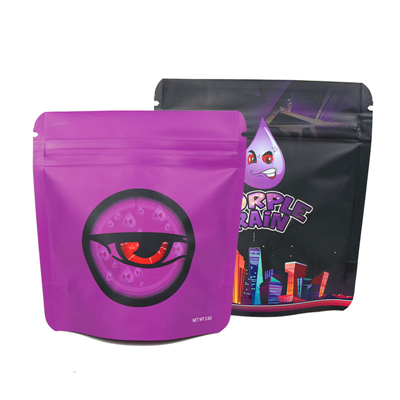
If you’re ready to explore flat bottom bags for your next product line, whether you need a standard size to keep costs low or a custom size to make your brand pop, reach out to my team. We work with businesses of all sizes, from startups to established brands, to find the right bag dimensions and features that fit your product, budget, and goals. Whether you need a small sample batch to test or a bulk order for your retail launch, we’re here to guide you through every step of the process.
Mylar Bags References:
- Packaging Association for Flexible Packaging. (2022). Flat Bottom Bag Design Standards and Industry Best Practices. Flexible Packaging Association Publication.
- Specialty Coffee Association. (2021). Packaging Guidelines for Specialty Coffee Roasters. SCA Resource Library.
- Pet Food Institute. (2023). Standard Packaging Sizes and Logistics for Pet Food Products. Pet Food Industry Report.
Shenzhen Hongbang Packaging Production Co., Ltd.
We are one of the most experienced flat bottom bag manufacturers and suppliers in China, specialized in providing high quality custom service. Please feel free to buy bulk flat bottom bag made in China here from our factory. For quotation and free sample, contact us now.
Address: Room 601, BLDG D, Wisdom Centre, No. 58 Nanlian Road, Longgang, Shenzhen China 518116
E-mail: pm@hongbangpack.com
WebSite: https://www.hongbangpack.com/
