Hey there, I’m Jake, and for the last 7 years, I’ve been running a small, family-style shop that cranks out hand-made sandwich panels. If you’ve ever dived into building a custom tiny home, a food truck that needs that extra layer of insulation, or a modular clinic that’s both light and tough, you’ve probably seen panels like ours—except a lot of brands mass-produce theirs on assembly lines, slapping on cheap materials to cut costs. Me? I spend 3 hours each morning at my workbench checking every single one I make, and lately, I’ve been getting nonstop questions from builders, contractors, even tiny home enthusiasts: “What environmental certifications do these panels have?” And honestly, I get it. Back when I started this business, I barely knew the difference between a G stamp and an FSC acronym—today, I’m deep in the weeds, sorting through which certifications actually matter for hand-made stuff (not just the big box mass-produced garbage). Let’s break this down, because if you’re sourcing sandwich panels, you don’t want to waste money on a certification that’s just greenwashing, right? Hand-made Sandwich Panel

First off, let’s get on the same page about what hand-made sandwich panels actually are, because that’s half the confusion. A sandwich panel is basically three layers: two rigid “facings” (usually metal, plywood, or OSB) glued to a thick core material that does the heavy lifting for insulation, structural strength, or fire resistance. When you make it by hand, you’re mixing and matching materials on a case-by-case basis—way different from a factory that runs 20,000 identical panels a day, churning out whatever is cheapest that month. Most hand-made panels I make use foam cores (polyisocyanurate, EPS, even sometimes eco-friendly cotton or hemp) and facings that are either galvanized steel, cross-laminated timber (CLT), or weather-resistant OSB. So the certifications that apply to factory panels? A lot of them don’t translate, or they leave out the hand-made-specific stuff.
Let’s start with the big names that actually cross over to hand-made, because if you’re googling this, you’ve probably heard of these. First up: FSC, or Forest Stewardship Council. This one’s non-negotiable if your panel’s facing is wood-based (plywood, CLB, OSB). The FSC label means the wood came from forests that are managed without clear-cutting, illegal logging, or messing up local ecosystems—they even check for fair pay for forest workers, which is a bonus. I use FSC-certified pine OSB for like 60% of my residential tiny home panels, and I make sure every single sheet has that little FSC stamp on the back. But wait—here’s the catch: FSC certifies the forest, not the panel you hold in your hands. So if a panel’s facing is FSC, that’s good, but don’t trust a brand that slaps FSC on a whole panel when only one layer has it. I make sure my glue (another big part of the panel!) is also FSC Chain of Custody certified, so the whole product’s supply line is traceable. That’s the part most hand-made suppliers skip, and it’s why I push FSC so hard for wood-faced panels.
Next, there’s GREENGUARD Gold. If you’re building something that people will breathe in daily—tiny homes, office pods, that new food truck kitchen you’re designing—this is your jam. GREENGUARD certifies that building materials emit way less volatile organic compounds (VOCs) than the legal minimum. VOCs are the stuff that makes new furniture smell weird and causes headaches, right? A lot of mass-made sandwich panels use cheap glues and foam that off-gas for months. I tested all my foam and glue against GREENGUARD Gold two years ago, and it passed with flying colors. The cool part for hand-made folks is that GREENGUARD actually audits small, batch producers too—not just the giant factories. They don’t just look at your big production run; they test a random panel pulled right from my workbench. I’ve had auditors stop by unannounced before (yeah, it’s a bit nerve-wracking, but worth it) and they were stoked that I track every batch of glue I use, no shortcuts. For anyone building for indoor air quality, this is way more important than some random “eco-friendly” label.
Now, let’s talk about the core stuff, because that’s where the biggest environmental impact of a sandwich panel lives. The core is usually 80% of the panel’s thickness, so if that core is garbage, the whole panel is garbage. Polyisocyanurate (polyiso) is super common for insulation, but a lot of it uses hydrofluorocarbons (HFCs) as blowing agents, which are like 1,000x worse for the planet than CO2. So what’s the certification for that? Enter: NSF/ANSI 701. This standard covers spray foam and rigid foam insulation, and part of it checks for blowing agents with low global warming potential (GWP). I switched all my polyiso core to NSF-certified foam last year, and it uses a blowing agent that has a GWP 1/20th of the old stuff. For you builders, this matters because it means your panel is contributing way less to climate change over its lifespan. There’s also a newer one: UL Environment’s GreenGuard for Insulation, but NSF 701 is more widely recognized in North America, so I stick with that.
Wait, what if you’re using more eco, hand-picked cores? Some of my clients use hemp core panels or wool core panels for off-grid tiny homes, because those are made from renewable, natural fibers. What certifications apply to those? Oh, right—there’s the Global Organic Textile Standard (GOTS) for organic fiber cores like wool or cotton. GOTS means the fiber was grown without synthetic pesticides or fertilizers, and the processing (like cleaning and turning it into a panel core) uses non-toxic chemicals. I had a client a few months ago building a mobile yoga studio, and he wanted 100% organic panels for his space where people practice breathwork—GOTS was a non-negotiable for him. That said, GOTS is specific to fibers, so if you mix hemp core with FSC wood facings, you’re combining two separate certifications to make a fully compliant product. The only downside? GOTS doesn’t have a standardized chain of custody for sandwich panels, so you have to make sure the core is certified, not just the fiber itself. I worked with a small hemp mill in Oregon that’s GOTS-certified, so I can guarantee that part all the way through.
Now, let’s get real about the stuff that’s just greenwashing, because there’s a ton of it in this space, especially for hand-made goods. I see it all the time: random suppliers slapping a “Natural Eco Panel” sticker on a panel that has plywood glued with formaldehyde-based glue and core made from plastic foam. No third-party audit, no independent testing, just a fancy name. Another fake one: “Carbon-Neutral Panel” with no proof—like, how do you account for the energy I use to heat my workshop in winter, or the truck that drops off my FSC sheets? Real carbon neutrality needs a third-party verifier, like the Carbon Trust or B Lab. I’m in the process of getting B Corp certified right now, because that means every part of my business—from waste reduction (I reuse 90% of my offcuts to make small scrap panels) to fair pay for my part-time helpers—is audited, not just the panels. That’s way more trustworthy than a random sticker.
Wait, also: what about local or regional certifications? If you’re in the EU, there’s the CE Mark’s Environmental category for building products, which covers sandwich panels. If you’re in Canada, there’s the Energy Star for Building Insulation, which checks how well the panel keeps heat in (that’s tied to energy use, so definitely environmental). I recently had a builder in Amsterdam ask about CE, so I got my panels tested against that standard, and it’s been a game-changer for international orders. The key here is that certifications aren’t one-size-fits-all—you need to match the cert to where your project is, and the specific materials you’re using.
Let me share a quick example to make this concrete. Last year, I had a builder in Minnesota who was constructing a 10-unit modular apartment complex. He came to me because he’d used mass-produced panels before that had weird off-gassing and only lasted 5 years, and he needed something that would last 25+ years and meet local environmental codes. We went with: FSC-certified cross-laminated timber facings, NSF 701-certified polyiso core, and GREENGUARD Gold tested. When he submitted his plans to the city, they didn’t ask for extra paperwork because all the certs were third-party verified, no fakes. He ended up saving on heating costs because the panels are so well-insulated, and his tenants loved that there was no weird new building smell. That’s the win you get when you don’t cut corners on certifications for hand-made panels.
Now, let’s talk about the unique angle for hand-made sandwich panels vs. factory ones, because that’s what makes our products different. Mass-produced panels often just grab whatever certification is easiest, because they make thousands of the same panel. Hand-made panels, since they’re batch or custom, mean we can tailor the certifications to your exact needs. If you’re building a food truck that needs to pass health codes and low-VOC materials, we can make panels that meet GREENGUARD and have food-safe glue. If you’re building an off-grid cabin in the Pacific Northwest, we can use FSC wood and low-GWP foam to get your project approved for sustainable building grants. No one-size-fits-all here, which is why I work directly with each client to map out what certs matter for their project, not just slap a random label on.
Wait, but what if you don’t need all the certifications? Like, if you’re building a simple garden shed, do you really need GREENGUARD Gold? Probably not. But if you’re building something that’s lived in, used daily, or needs to meet local green building regulations, those certs are non-negotiable. I always tell clients: ask for the third-party audit reports, not just the sticker. Any legitimate supplier will have those on hand, or can request them from their cert body. I keep all mine in a Google Drive folder I share with potential clients within 24 hours—no secret, no hoops to jump through.
Let me wrap this up, because I know this is a lot, and I’ve been rambling (my team teases me for that, honestly). The short answer is: yes, there are solid environmental certifications for hand-made sandwich panels, but you have to know which ones apply to your materials and project. FSC for wood facings, GREENGUARD Gold for indoor air quality, NSF 701 for foam cores, GOTS for natural fiber cores—avoid the random “eco” stickers that have no third-party backup. And for hand-made specifically, look for suppliers that can customize certifications to your needs, not just mass-produce one certified panel for every order.
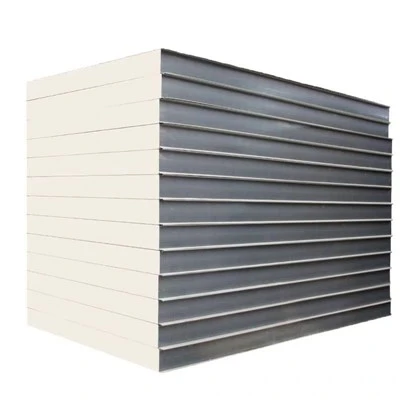
If you’re a builder, contractor, or project lead who needs to source hand-made sandwich panels that check all the environmental boxes, or even just want to ask more questions about specific materials and certs, hit me up. I don’t do salesy pitches—we’ll talk through your project, what you need, and make sure every panel is up to snuff. No hidden fees, no garbage labels, just honest, hand-made panels that actually are as eco as we say they are.
Machine-made Sandwich Panel References:
- Forest Stewardship Council. (2024). Chain of Custody Certification Requirements. FSC International.
- GREENGUARD Environmental Institute. (2023). GREENGUARD Gold Certification Standard for Building Materials. UL LLC.
- NSF International. (2022). NSF/ANSI 701 Standard for Rigid Polyisocyanurate Foam Insulation. NSF.
- Global Organic Textile Standard. (2024). GOTS Certification Requirements for Fibre-Based Products. GOTS International Association.
- B Lab. (2023). B Corp Certification Criteria for Small Manufacturing Businesses. B Lab Global.
Suzhou Jinye Air Purification Steel Structure Co., Ltd.
As one of the most professional hand-made sandwich panel manufacturers and suppliers in China, we offer a wide range of products with superior quality. Please feel free to wholesale durable hand-made sandwich panel for sale here from our factory.
Address: No. 858 Jinsheng Road, Jinjiaba Town, Wujiang District, Suzhou City, Jiangsu Province, China
E-mail: 18913057067@163.com
WebSite: https://www.suzhoujinye.com/
