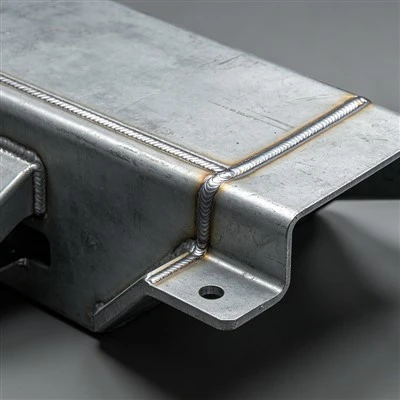
Sheet Metal Cabinet Hey there, It’s Jake from the sheet metal team here, and I’ve spent the last 12 years walking clients through the biggest headache they run into when getting custom parts made: picking the right coating. Last month alone, three different buyers came to us with parts that were already coated wrong—one batch of HVAC brackets peeled off in coastal humidity, another set of electrical enclosures corroded because they used the wrong coating for industrial washdown environments, and a third group of custom signage panels faded so fast they couldn’t even finish their installation project. I heard the same line from all three: “I thought any coating would work for sheet metal.” Spoiler: It doesn’t. Not even close. Sheet metal isn’t a one-size-fits-all material, and neither are coatings. Choosing the wrong one doesn’t just mean wasted material cost—it means delayed deliveries, warranty headaches, and even damaged brand reputation if the parts are for public-facing products. That’s why I put together this breakdown of what actually matters when you’re weighing your options. Let’s start with the basics: sheet metal coatings do three core jobs, and every choice has to tie back to one of these first. First, they protect the metal from corrosion—steel, aluminum, copper, even galvanized sheet will rust or degrade if exposed to moisture, chemicals, or outdoor elements. Second, they add durability to scratch and impact damage, which is critical for parts that get moved, installed in harsh sites, or used in heavy equipment. Third, they serve aesthetic purposes: matching a brand’s color, holding up to UV light for outdoor signage, or having a smooth finish that meets FDA standards for food-grade equipment. No matter what, your coating has to align with your part’s end use, not just the cheapest quote you find online. Let’s break down the most common coating types we offer here at our shop, plus when to pick each one. First up, powder coating. This is probably the most popular option for our clients, and for good reason. It’s a dry powder applied electrostatically, then cured with heat to form a hard, durable finish. We use two main types of powder coatings here at our facility: thermoset and thermoplastic. Thermoset is the workhorse—think of it as the standard powder for almost everything from office furniture brackets to agricultural equipment frames. It’s resistant to chipping, scratching, and most chemicals, and it comes in almost every color and finish you can imagine: matte, gloss, metallic, textured, even faux wood grain. Where it shines most is for parts that spend time outdoors. Thermoset powder can hold up to 5+ years of sun exposure without fading, as long as you pick a UV-stabilized formula. We had a client last year who was making outdoor fence posts for a national park—they went with black thermoset UV-stabilized powder, and two years later, they’ve had zero fade or rust reports. That said, thermoset powder has a limit: it’s not the best for parts that need to handle extreme high heat, like exhaust components or industrial furnaces. For that, thermoplastic powder is a better call. Thermoplastic is cured at higher temperatures, and it’s flexible, impact-resistant, and can handle continuous heat up to 250°F, which is way higher than standard thermoset. It’s also corrosion-resistant even on thin sheet metal, so it’s great for parts like electrical junction boxes that sit in utility closets where temperatures fluctuate. The downside of powder coating, though, is that it’s not ideal for parts that need ultra-smooth precision, or parts with complex geometries that have hard-to-reach edges. Powder can get uneven in crevices if not applied properly, which is why we have a team of master coaters who hand-inspect every part before it leaves our shop. Next, let’s talk about wet paint, or liquid coating. This is the older, more flexible option, and it works for parts that powder can’t. If you have a sheet metal part with tiny holes, complex bends, or intricate designs that powder would look uneven on, wet paint is your pick. We use water-based and solvent-based wet paints here, and both have their uses. Water-based paint is better for the environment, has low VOCs (volatile organic compounds), and dries to a smooth finish that’s perfect for consumer-facing parts like appliance panels or custom metal art. It also adheres well to aluminum, which can sometimes be tricky for powder if the surface prep isn’t perfect. Solvent-based paint is more durable for harsh environments, and it dries faster than water-based, which is good for tight production timelines. But it’s important to note that wet paint does have drawbacks: it’s thinner than powder, so it’s more prone to scratching if it’s not applied in multiple coats, and it fades faster than powder when exposed to direct sunlight. We always advise clients going with wet paint to add a clear topcoat if their part is going outside— that extra layer cuts down on UV damage by 30-40%, based on our in-house testing. Third on the list is e-coating, also called electrodeposition coating. This is the most underrated coating for corrosion protection, in my opinion, and it’s non-negotiable for parts like automotive undercarriage components, appliance frames, or any metal part that’s exposed to salt or chemicals. E-coating works by submerging the entire sheet metal part in a tank of charged paint, then applying an electric current that pulls the paint evenly onto every surface—even the deepest crevices, edges, and holes. There’s no other coating that can coat a part’s internal threads, welds, and back sides as evenly as e-coating, which makes it perfect for parts where corrosion starts first in hard-to-reach areas. We pair e-coating with a topcoat of either powder or wet paint for most projects, because e-coating alone is more of a primer than a full finish. It’s thin, so it doesn’t add much thickness to the part, which is great for precision parts where dimensional accuracy matters. That’s a huge plus for clients making things like medical device brackets, where even a 0.001-inch difference in part size can cause assembly issues. Now, let’s talk about the specific factors you need to weigh before you make a call. This is the part that trips most people up, so I’m going to list them out clearly, with real examples from our shop to make it concrete. First: What’s the environment your part will live in? If your part is going in a coastal area (think dock parts, beach house hardware), you need corrosion resistance way above average. We had a client a few years back who ordered aluminum brackets for a pier renovation—they initially picked standard powder coating, but after our team did a quick environment assessment, we suggested e-coat plus marine-grade powder coating. Without that, salt spray would have eaten through the coating in 12 months instead of 5+ years. For parts in industrial settings, like food processing plants where they wash down equipment with harsh chemicals, you need a coating that resists acids and detergents. E-coat plus a high-performance thermoset powder works here, same as it does for marine environments. If your part is going indoors, like office desk supports or store display racks, you can go with standard powder or even wet paint, but if it’s in a high-traffic area where it’ll get bumped or scratched, powder is still the safer bet. Second: What’s the part’s function and geometry? If it’s a thin, precise part, like a custom metal bracket for a camera mount, dimensional accuracy matters more than extra thickness. That’s where e-coat shines because it adds almost no thickness, so your part will fit exactly as designed. If it has complex bends, deep recesses, or internal cavities, e-coat or wet paint is better than powder, because powder can leave gaps in those areas. We had a client making metal electronic enclosures last year—they initially wanted powder coating, but the enclosure had a 2-inch deep slot for wiring, and powder would have left a gap at the bottom of the slot. We switched them to e-coat plus a wet paint topcoat, and the problem was solved, no extra charges. Third: Aesthetics and brand requirements. If you’re making parts for a branded product, color consistency is non-negotiable. Powder coating is the best here because we can mix custom batches and ensure every part is the same shade, even if you order 1000 units. Wet paint can be more prone to slight color variations between batches, though modern water-based paints have gotten much better at this. If you need a smooth, high-gloss finish, wet paint is better than powder for ultra-gloss or satin finishes that are less textured. For outdoor signage, UV stability is key—always pick a UV-stabilized powder, because standard powder will fade to a dull gray in 18-24 months, which will make your signage look unprofessional. Fourth: Budget and timeline. This is always a factor, and I get it. Powder coating is usually more cost-effective for large orders, because the application process is faster once the setup is done. Wet paint is cheaper for small custom orders, because you don’t have to buy large batches of powder. E-coating is usually mid-range, but it’s worth the extra cost for parts where corrosion will cause warranty claims down the line. We always tell clients to avoid cutting corners on coating to save a few bucks—we’ve seen too many jobs where a $0.50 per part savings on coating turned into $10,000 in rework when parts had to be redone. Let’s also cover some common mistakes we see all the time, because these are avoidable. First mistake: Choosing a coating based on looks alone, not function. We had a client who picked a bright red glossy powder for their outdoor mailboxes, not realizing it wasn’t UV-stabilized. By the end of the first summer, the red had faded to a pale pink, and the powder started chipping. We ended up re-coating them with UV-stabilized powder, but it delayed their order and cost them extra. Second mistake: Skipping surface preparation. No coating will adhere properly if the sheet metal surface isn’t cleaned and prepped first. That means removing oil, dirt, rust, and mill scale from the metal before applying coating. We do a multi-step surface prep here at our shop—including degreasing, iron phosphate or zinc phosphate treatment, and a final rinse—because we’ve seen what happens when companies skip this: coatings peel off within months. Third mistake: Not testing the coating for your specific application. We always recommend doing a small test batch first when you’re trying a new coating. Last quarter, a construction client wanted to use a new thermoplastic powder for bridge supports, so we did a 10-part test batch, had them test it in their actual outdoor site for 30 days, and it held up. If we’d coated the full 500 parts without testing, they would have had a major failure. If you’re still unsure which coating is right for your sheet metal parts, the best step is to share the details of your project with us. Tell us what the part is used for, where it’s going, your timeline, and any specific requirements you have, and we’ll walk you through the options, suggest testing if needed, and make sure you get a coating that lasts. We’ve worked with everyone from small startups making custom furniture to large industrial companies building heavy equipment, and we know that the right coating isn’t just a finish—it’s part of making your part work as intended for years. If you’re ready to discuss your next sheet metal project, reach out to our team to connect. We’re here to help you avoid the mistakes we’ve seen thousands of clients make, and get the right coating for your parts.
References: 1. Metals Handbook, Volume 5: Surface Cleaning, Finishing, and Coating, American Society for Metals, 1982. 2. Corrosion Resistance of Metals and Alloys, 2nd Edition, Fontana, M.G., Greene, N.D., McGraw-Hill, 1978. 3. Powder Coating Technology: Principles and Practice, Tracton, A.A., CRC Press, 2006. 4. Electrocoating: Theory and Practice, Brown, R.G., Society of Manufacturing Engineers, 1999. Sheet Metal Parts

Hefei Excellent Intelligent Technology Co., Ltd.
As one of the most professional sheet metal parts manufacturers in China, we’re featured by quality products and good service. Please rest assured to wholesale bulk customized sheet metal parts made in China here from our factory. Also, pricelist is available.
Address: No. 3 Jingyi Road, Douzhen Industrial Park, Gangji Town, Changfeng County, Hefei City, Anhui Province
E-mail: 1637201948@qq.com
WebSite: https://www.cnakst.com/
