If you’ve ever stood in front of a parts cabinet, squinting at a labeled AC gear motor and wondering, “Wait… what size is this, exactly?” — you’re not alone. I’ve been selling AC gear motors for 7 years now, and that’s still one of the first questions I get from folks fresh to motion control, factory maintenance techs who’ve mixed up their motor last week, even engineers who swear they “know motors” but blank when they’re staring at a motor on a shipping dock. The size of an AC gear motor isn’t just a number on a spec sheet — it’s the difference between a conveyor line that runs smooth and one that grinds to a halt, between a packaging machine that meets its quota and one that’s underperforming because the wrong motor got bolted on. Today, I’m breaking down what “size” actually means for these things, how we measure them (as a supplier, this is stuff we live and breathe), and why guessing at size will cost you time and money. Let’s get into it. AC Gear Motor

First, let’s kill the myth that “size” is just the diameter of the motor’s body or how big it feels when you carry it. Yeah, if you pick two units of the same power rating, one might be bigger than the other — that’s just how different manufacturers package the guts. But real size for AC gear motors isn’t about how much space it takes in your hand or on your workbench. It’s about two core specs that actually matter: power output and torque, plus the gear ratio that ties those two together. Let’s make this simple, no overly jargon-heavy stuff.
Power is the first big piece here. We talk about AC gear motor power in watts or horsepower — for context, a tiny 1/10 HP motor (that’s roughly 75 watts) will spin a small conveyor for a vending machine or turn a low-speed fan in a HVAC system. A 2 HP motor (about 1500 watts) is the workhorse you’ll find on a medium-sized conveyor that moves boxes across a warehouse floor, or a pump for a small water treatment system. The higher the power, the bigger the motor’s frame tends to be, but frame size (the standardized number manufacturers use to label motor physical dimensions, like NEMA frame numbers) is secondary. A 1 HP motor from Brand A might be a NEMA 56 frame, while a 1 HP motor from Brand B could be a NEMA 48 frame — same power, slightly different physical size, but that’s about fitting the mount you already have, not the “size” of the motor’s actual performance.
Torque is the secret star of size, though. This is the force that makes your machine do work — it’s what turns a conveyor’s rollers, spins a mixer’s blades, or pulls a stack of boxes up a ramp. Torque is measured in pound-feet (lb-ft) or Newton-meters (Nm), and here’s the thing: when you pair an AC motor with a gearbox (that’s the “gear motor” part), the gear ratio changes the torque. A standard AC motor alone might put out 5 lb-ft of torque at 1750 RPM. Pair it with a 10:1 gear ratio, and suddenly that torque jumps to 50 lb-ft, and the motor slows down to 175 RPM. So size isn’t just about the motor or just about the gearbox — it’s about the combined torque and speed the whole unit delivers to your application. That’s why two motors with the same power rating can feel like different sizes in practice: one might have a higher gear ratio for low-speed, high-torque jobs, while another is built for faster, lower-torque tasks like spinning a conveyor for small parts.
Now, let’s talk about why as a supplier, we have to get this right — and why getting it wrong is a headache for everyone. Last year, a small packaging company contacted us because they’d ordered a replacement AC gear motor online without checking the actual torque spec. Their old motor was rated for 30 lb-ft of torque at 50 RPM, perfect for pulling sealed plastic bags into their heat-sealing machine. They ordered a motor with the same power rating, but the gear ratio was 5:1 instead of 15:1, so it only put out 10 lb-ft of torque. It couldn’t pull the bags tight enough, so they had to shut down their line, which cost them thousands in lost orders that week. That’s the kind of mistake that makes us double-check every spec with a customer before we even process an order.
So how do you actually figure out the right size for your AC gear motor? Let’s walk through the steps we walk every customer through. First, list out what your machine needs to do. How much weight is the motor going to move? How fast does it need to move that weight? Let’s say you have a conveyor that needs to move 500 lb boxes 100 feet per minute. You need to calculate the torque required to turn the rollers (that includes friction from the conveyor belt, the weight of the boxes, and any incline if the conveyor is sloped). Then, multiply that by a safety factor — usually 1.5 to 2 — to account for unexpected jolts, worn rollers, or temporary overloads, like if someone stacks an extra box on the line. If you skip the safety factor, you’re asking the motor to work harder than it was built for, which will burn it out in a few months instead of years.
Next, check the physical mount. This is the part that trips a lot of people up, especially if they’re replacing an old motor. You might have a NEMA 56C frame mount, which is a standardized bolt pattern that fits most North American motors. If you order a motor with a different mount, even if the torque and power are right, you won’t be able to bolt it to your machine without drilling new holes or making a custom bracket — which costs time and money. That’s why we always ask for photos of the old motor’s mount or the bolt spacing if a customer is replacing a unit. It’s a quick check, but it avoids a lot of frustration.
Also, don’t forget the ambient conditions. If your motor is going to be installed in a dusty foundry, a cold outdoor warehouse in the winter, or a wet food processing plant, you might need a larger motor than the basic spec suggests. Dust can clog the gearbox, cold makes metal stiffer, and moisture can cause more friction — all of which mean the motor has to work harder, so sizing up slightly will make it last longer. We carry motors with ingress protection (IP) ratings for wet environments and sealed gearboxes for dusty spaces, and we always adjust size recommendations based on where the motor will live.
Let’s bust some common myths about AC gear motor size while we’re at it. First myth: bigger motor = better motor. No, not always. If your application only needs 20 lb-ft of torque, a 1 HP motor with a 10:1 ratio is more than enough. A 2 HP motor with the same ratio would be bigger, more expensive, and waste energy — it would draw more power than it needs to, which will bump up your electricity bills every month. Second myth: all AC gear motors have standard sizes. Nope. While there are some common power and torque ranges, different manufacturers design their gear ratios and mount sizes differently. That’s why buying from a supplier who knows their stuff matters — we don’t just sell off a shelf; we match your exact needs to the right unit, whether that’s a standard off-the-shelf model or a custom build for a unique application. Third myth: RPM doesn’t matter for size. RPM (revolutions per minute) is tied directly to torque, so if you need a slow motor (like 50 RPM for a conveyor), that same torque will require a different motor size than a fast motor (like 1000 RPM for a machine that cuts fabric). The gear ratio adjusts RPM, but the motor’s power has to match that, so it all ties back to size.
As a supplier, I can tell you that the most common mistake customers make when sizing AC gear motors is focusing only on power and ignoring torque. Power is how fast the motor can spin, torque is how much force it can apply — you need both. A motor with high power but low torque will spin fast but can’t move heavy loads; a motor with high torque but low power will move heavy loads slow. You need a balance that fits your application. For example, a carousel for a restaurant’s pickup area needs to spin at 10 RPM so customers can grab their food easily, and it only needs to move a few pounds, so a tiny 1/4 HP motor with a 60:1 ratio is perfect. A loading dock conveyor that moves pallets full of supplies needs to spin at 20 RPM, handle 2000 lb pallets, so it needs a 2 HP motor with a 20:1 ratio to get the right torque.
Another thing we always discuss is serviceability. If your motor is in a hard-to-reach spot, maybe in the middle of a production line, you might want a slightly smaller motor that’s easier to lift and install, even if it means adjusting the gear ratio a bit. A big motor that takes two people to lift is going to add labor costs every time you need to replace it, so that’s a part of “size” too — not just performance, but how easy it is to work with.
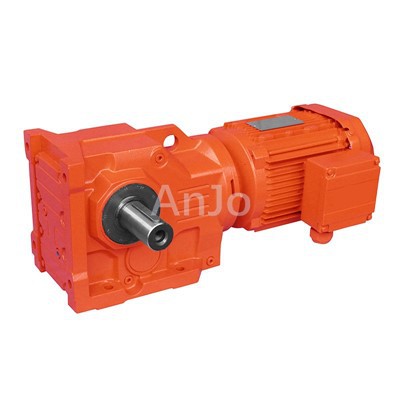
Let’s circle back to that packaging company story I mentioned earlier. They came to us a week after the bad motor arrived, and we swapped it out for the exact 30 lb-ft, 50 RPM motor they needed, no extra cost for rush shipping, and their line was back up the same day. That’s why we don’t just sell motors — we walk through all the size specs with you, point out the fine print, and make sure you get the right unit the first time. We’ve seen enough bad calls to know that a little extra time checking size upfront saves everyone a ton of hassle down the line.
Customized Gearbox If you’re working on a project right now — whether it’s replacing a broken motor on an old machine, building a new conveyor line, or setting up a packaging process — don’t just guess at the size of your AC gear motor. Figure out your required torque, speed, mount size, and environmental conditions first. Hit us up to walk through the details, even if you’re not 100% sure of the specs. We’ve helped hundreds of folks narrow down the right size, and we’ll make sure you don’t end up with a motor that’s too small (and burns out) or too big (and wastes energy). Getting the size right isn’t just a spec game — it’s the best way to keep your machines running smooth, your costs low, and your production on track.
References
- NEMA Standards Publication MG 1-2022, Motors and Generators, National Electrical Manufacturers Association.
- "AC Gear Motors: Sizing Guide for Industrial Applications," Industrial Motor Control Association, 2023.
- Torque Fundamentals for Motion Control, Motion Control Industry Association, 2021.
Hangzhou ANG Drive Co., Ltd.
As one of the most professional ac gear motor manufacturers and suppliers in China, we’re featured by quality products and good service. Please rest assured to wholesale custom made ac gear motor from our factory. Good service and quality products are available.
Address: No.185, Jincheng Rd., Hangzhou 311202, China
E-mail: export2@angdrive.com
WebSite: https://www.anjodrive.com/
